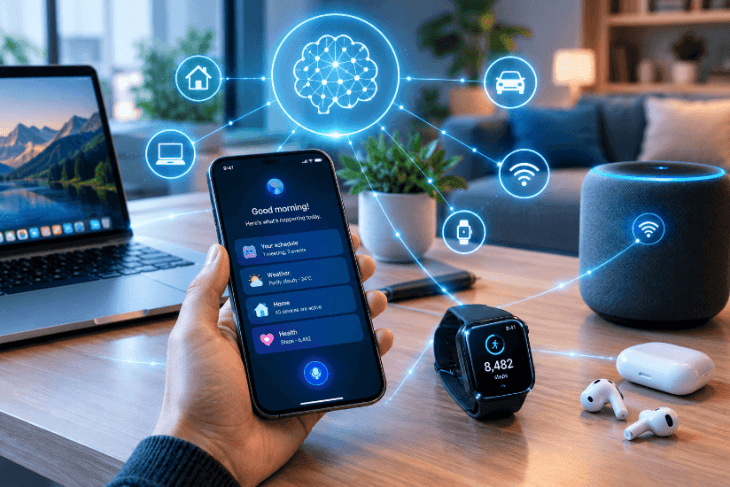
Your phone suggests the next word as you type, your favorite streaming app recommends a show, and your navigation app estimates how long it will take to reach your destination. These familiar features often rely on machine learning, a type of artificial intelligence (AI) that learns patterns from data to make predictions.
In 2027, machine learning applications continue to influence how people use technology at home, at work, and online. They help businesses identify unusual transactions, support healthcare professionals, filter spam, personalize digital services, and automate repetitive tasks. Students, marketers, content creators, and small business owners can also benefit from tools that use machine learning to organize information and improve everyday workflows.
However, these systems are not always accurate. They can make incorrect predictions, reflect biases in their training data, and raise concerns about privacy and security. Understanding how machine learning works, where it helps, and where it falls short can help you make better technology choices.
What Is Machine Learning, and How Does It Work?
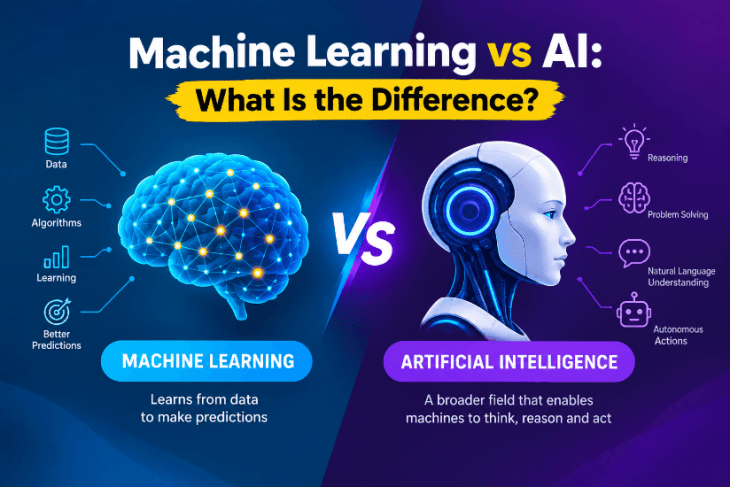
Machine learning (ML) is a branch of artificial intelligence that allows computer systems to learn patterns from data and use those patterns to make predictions or decisions. It powers many familiar services, including spam filters, product recommendations, voice recognition, and fraud monitoring.
Traditional software often follows instructions written for specific situations. A machine learning model, by comparison, uses examples to identify patterns that may help it handle new information. It still relies on software, data, and human decisions during development and use.
What Is Machine Learning in Simple Terms?
Imagine your email inbox receives hundreds of messages. Some are genuine conversations, while others contain suspicious links, unwanted advertisements, or misleading offers.
A machine learning spam filter can study examples of unwanted and legitimate messages. It learns patterns associated with each category and uses them to estimate whether a new message belongs in the spam folder.
This is one of the simplest machine learning examples. The system does not understand every message exactly as a person would. It makes a prediction based on patterns, and that prediction can be wrong.
How Does a Machine Learning System Learn From Data?
A machine learning system generally follows several steps:
- Collect data: Developers gather examples related to the task, such as images, transactions, text, or customer activity.
- Train a model: The system uses the data to learn patterns associated with the intended outcome.
- Test performance: Developers evaluate the model using examples it did not see during training.
- Make predictions: Once the model is ready, it processes new information and produces an estimate or classification.
- Monitor results: Developers check performance and update the model or its surrounding systems when needed.
The quality of the data matters throughout this process. Incomplete, outdated, or biased data can lead to unreliable predictions. A model may also become less accurate when real-world behavior changes.
What Is the Difference Between AI, Machine Learning, and Deep Learning?
These terms are related, but they describe different things.
| Technology | What it means | Example |
| Artificial intelligence (AI) | The broader field of building systems that perform tasks associated with human intelligence | A virtual assistant |
| Machine learning (ML) | An AI approach that learns patterns from data | An email spam filter |
| Deep learning | A type of machine learning that uses multilayer neural networks | A system that recognizes objects in photos |
In simple terms, AI is the broader field, machine learning is one approach within AI, and deep learning is a specialized form of machine learning.
Understanding this difference helps you evaluate what a digital tool can do instead of assuming every feature described as AI works in the same way.
What Are the Most Common Machine Learning Applications in Everyday Life?
Many apps and devices use machine learning to analyze information, predict outcomes, sort content, and suggest actions. You may interact with these systems several times a day without realizing it.
How Does Machine Learning Personalize Search Results and Recommendations?
Search engines analyze signals such as search terms, page relevance, and interactions to help rank results. Streaming platforms use viewing and listening patterns to recommend movies, television shows, and music. Shopping websites may suggest products based on items you browse, purchase, or add to a wish list.
Social media feeds can also use machine learning to predict which posts might interest you. These recommendations can help you discover relevant content quickly.
However, personalization has drawbacks. A platform may repeatedly recommend similar material, limiting your exposure to different viewpoints or new interests. Recommendations can also be influenced by commercial priorities.
How Does Machine Learning Improve Smartphones and Voice Assistants?
Smartphones use machine learning for features such as predictive text, speech recognition, photo enhancement, and spam-call detection.
For example, your keyboard may suggest a word based on the sentence you are writing. A camera may process an image to improve lighting or recognize a face. Voice assistants use speech recognition to convert spoken words into text and help determine what a person is asking.
Some devices process selected tasks directly on the phone. This can reduce delays and limit the amount of information sent to remote servers. However, local processing does not automatically guarantee privacy, and not every smartphone feature relies on machine learning.
How Does Machine Learning Help With Maps and Transportation?
Navigation apps analyze traffic patterns, location information, road conditions, and historical travel data to estimate arrival times. They can suggest alternate routes and update predictions when traffic changes.
Delivery services may use machine learning to forecast demand and estimate where drivers are likely to be needed. Transport companies can also use predictions to plan schedules and manage resources.
These systems are useful, but unexpected events can affect their accuracy. A sudden accident, road closure, or severe weather event may cause delays that the model could not predict in advance.
How Do Online Stores and Digital Ads Use Machine Learning?
Online retailers use machine learning to recommend products, organize search results, and forecast demand. A store may analyze past sales to estimate which items need restocking.
Advertising platforms can also use information about a page, audience interests, and previous interactions to select ads. This can make advertisements more relevant to individual users.
However, excessive tracking can create privacy concerns. Review app permissions, limit unnecessary data sharing, and check whether a service lets you adjust personalization settings.
How Does Machine Learning Help With Email, Translation, and Productivity?
Email providers use machine learning to filter spam and identify suspicious messages. Translation tools can use learned language patterns to translate text, while speech-to-text applications turn spoken words into written notes.
Productivity software may also suggest email replies, summarize documents, organize information, or classify customer requests. These features can save time for students, marketers, content creators, and small business owners.
Still, the output needs review. A translation may miss the intended meaning, a summary may omit an important detail, and a spam filter may incorrectly classify a legitimate email.
Together, these are common examples of machine learning in everyday life. The main benefit is that technology can make useful predictions from data, but people still need to check important results.
What Are Practical Machine Learning Examples You May Use Every Day?
Machine learning use cases appear across many familiar apps and services. The following table shows how these systems work and where they can fall short.
| Everyday example | What machine learning can do | Important limitation |
| Email spam filter | Identifies and sorts suspicious messages | Genuine emails may be marked as spam |
| Streaming app | Recommends movies, shows, and music | Recommendations may become repetitive |
| Navigation app | Predicts traffic and arrival times | Sudden delays can affect estimates |
| Smartphone keyboard | Suggests words and phrases | Suggestions may miss your intended meaning |
| Banking app | Flags unusual transactions | Legitimate payments may be blocked |
| Shopping website | Recommends products based on activity | Recommendations may favor commercial interests |
| Smart camera | Detects objects, faces, or movement | Poor lighting may reduce accuracy |
| Fitness wearable | Estimates activity and selected health metrics | Readings may be inaccurate |
Five especially familiar examples are spam filtering, streaming recommendations, navigation estimates, predictive text, and banking fraud alerts.
Imagine your bank notices a payment that differs significantly from your usual spending pattern. Its system may flag the transaction for verification. This does not automatically mean fraud has occurred; the payment simply requires another check.
The key lesson is that machine learning supports decisions rather than guaranteeing correct outcomes. Always verify important alerts and avoid relying on a single automated prediction for decisions involving money, health, or safety.
How Is Machine Learning Used in Healthcare?
Machine learning in healthcare helps medical teams analyze health data, examine medical images, monitor selected patient measurements, and identify patterns that may deserve further attention.
When properly tested and used by qualified professionals, these tools can support clinical decisions. They do not replace medical expertise or guarantee a correct diagnosis.
How Is Machine Learning Used in Medical Imaging?
Medical imaging is an important area of healthcare machine learning. Some systems analyze X-rays, CT scans, and MRI images to flag areas that may require closer examination.
This can help radiologists prioritize cases and support their assessment. Machine learning is also used in certain screening applications, including systems that examine retinal images for signs of diabetic retinopathy.
The usefulness of these tools depends on their testing, image quality, and suitability for the patients being assessed. A result from an automated system still needs to be interpreted in the appropriate clinical context.
Can Machine Learning Support Personalized Treatment and Patient Monitoring?
Machine learning models can analyze patient records, laboratory results, and other health information to estimate selected risks. Healthcare teams may use these estimates alongside medical history and clinical judgment when planning care.
Connected devices can also collect measurements such as heart rate or blood glucose. Some systems analyze these readings and flag changes that may require attention.
However, a prediction cannot explain every aspect of a person’s condition. Monitoring tools also need appropriate follow-up procedures so that alerts lead to meaningful action.
What Are the Risks of Machine Learning in Healthcare?
Healthcare systems can make mistakes. Biased training data may reduce accuracy for certain patient groups, while false positives can lead to unnecessary tests or concern. False negatives may fail to flag a genuine problem.
Patient information also requires strong privacy and security protections. Healthcare providers should assess whether a system performs reliably across relevant groups and continue monitoring it after deployment.
For everyday users, the rule is straightforward: do not rely on a consumer AI tool to diagnose a condition or replace professional medical advice. Use technology to prepare questions or understand general information, then discuss health concerns with a qualified healthcare professional.
How Does Machine Learning Improve Banking and Fraud Detection?
Banks process large numbers of payments and account activities every day. Checking every transaction manually would be difficult, so machine learning can help identify patterns that may indicate suspicious behavior.
Machine learning fraud detection systems analyze transaction information and other risk signals to flag payments that may need verification.
How Does Machine Learning Fraud Detection Identify Suspicious Payments?
A model may consider factors such as payment amount, transaction timing, merchant type, location, and previous spending patterns. It uses these signals to estimate whether a payment differs from expected behavior.
For example, imagine you usually make small purchases near home, but your card is suddenly used for an expensive purchase in another country. Your bank may flag the payment and request verification.
This does not prove that the payment is fraudulent. The transaction may be legitimate, especially if you are traveling or making an unusual purchase.
How Is Machine Learning Used in Banking Beyond Fraud Prevention?
Machine learning in banking supports several other tasks. Banking apps can categorize purchases into groups such as groceries, travel, and bills. Lenders may use models to assess credit risk alongside other financial information.
Customer-service systems can classify questions and direct them to the appropriate team. Financial institutions may also analyze transaction patterns to identify activity that requires further investigation.
Banks often combine machine learning with traditional rules, risk assessments, and human review. The exact process depends on the service and institution.
Why Can a Bank Flag a Legitimate Transaction?
A model may flag a genuine payment because it differs from your usual activity. A large purchase, a new travel destination, or an unfamiliar merchant may trigger additional checks.
This is called a false positive: a legitimate transaction is classified as potentially risky.
If your bank contacts you, use its official app or the phone number printed on your card to verify the payment. Never share your PIN, password, or one-time passcode with someone who contacts you unexpectedly.
Machine learning can improve fraud monitoring, but it cannot identify every scam or confirm that every suspicious-looking payment is fraudulent.
How Is Machine Learning Used in Cybersecurity?
Machine learning in cybersecurity helps security systems analyze files, emails, login activity, and network behavior to identify possible threats. It can help security teams prioritize alerts and investigate suspicious activity more quickly.
Can Machine Learning Detect Malware and Phishing?
Machine learning models can examine files for patterns associated with malware and classify messages that resemble phishing attempts. They may also detect unusual login behavior or unexpected activity on a company network.
Imagine you sign in to your email from a new device in an unfamiliar location. A security system may ask you to verify your identity before allowing access. This extra check could involve machine learning, fixed security rules, or both.
These systems can help detect threats, but they are not perfect. Criminals continually change their techniques, and a new attack may not match patterns the model has learned.
Can Machine Learning Prevent Every Cyberattack?
No. Machine learning cannot stop every cyberattack. A model may miss a new threat, incorrectly flag safe activity, or be misled by carefully crafted inputs.
For this reason, automated detection should be combined with software updates, strong passwords, multifactor authentication, and human investigation.
Small businesses and everyday users should treat machine learning as one layer of protection rather than a complete security solution. Avoid suspicious links, install updates promptly, and use multifactor authentication wherever possible.
How Can Small Businesses, Marketers, and Content Creators Use Machine Learning?
Many machine learning use cases are available through existing business software. Small businesses do not always need to develop their own models or hire a dedicated AI team to benefit from these features.
How Can Machine Learning Help Small Businesses?
A retailer can use sales forecasting to estimate which products may sell well in the coming weeks. Customer support software can categorize incoming requests, while anomaly detection can flag unusual changes in sales or website activity.
Customer segmentation can group buyers according to shared patterns, helping businesses understand different customer needs.
These predictions can support planning, but owners should compare them with actual sales, customer feedback, and business goals.
How Does Machine Learning Support Digital Marketing?
Marketing platforms use machine learning to analyze campaign performance, group audiences, personalize recommendations, and estimate customer behavior.
For example, a marketing team may use predictive analytics to identify customers who are less likely to return. It can then evaluate whether better support, relevant content, or a more useful offer could improve retention.
Content creators can also use machine learning features to summarize research, organize information, or identify patterns in audience engagement. However, these tools should support editorial judgment rather than replace fact-checking and original thinking.
What Should a Small Business Check Before Adopting an ML Tool?
Start with a specific problem, such as reducing the time spent sorting customer support requests. Choose a tool that addresses that problem and test it against your existing process.
Before using it, check what data it collects, how the information is stored, whether it is shared with other providers, and what permissions the software requires.
Measure practical results, including accuracy, cost, time saved, and customer satisfaction. If the tool does not improve the process, adjust its settings or consider another approach.
The goal is to solve a business problem, not to adopt machine learning simply because the technology is available.
What Machine Learning Trends Should You Watch in 2027?
Machine learning trends in 2027 are likely to focus on more local processing, greater integration with generative AI, and tools that can complete connected tasks. The pace of adoption will vary by device, software provider, cost, and performance.
These developments are best viewed as areas to watch rather than guaranteed features that every user will have.
Will More Machine Learning Run Directly on Devices?
On-device machine learning processes data locally on hardware such as smartphones, laptops, and smart cameras. Edge machine learning follows a similar principle by processing information close to where it is collected.
Local processing can reduce delays and allow selected features to work without a continuous internet connection. It can also reduce the amount of data that needs to be sent to remote servers.
However, on-device processing does not automatically guarantee privacy. Users should still review app permissions, storage practices, and the information that a service sends elsewhere.
How Are Generative AI and Machine Learning Working Together?
Generative AI uses machine learning techniques to create content such as text, images, audio, and code. Other machine learning systems can help rank information, classify documents, and predict what users may need.
These technologies can work together within productivity applications. For example, a tool might identify relevant documents, summarize their contents, and suggest a response to an email.
The results still need review. Generated information can contain errors, omit context, or present an uncertain claim too confidently.
Will AI Agents Change How Everyday Apps Work?
AI agents are systems that can carry out multiple connected steps toward a goal. Depending on the software and permissions, an agent might organize information, prepare a draft email, or help manage a task across supported applications.
Their capabilities and reliability vary. Users should not assume an agent can complete every task independently or safely.
Before enabling an agent, check its permissions and keep human approval for important actions, including sending messages, sharing files, or spending money.
What Should Readers Realistically Expect From Machine Learning in 2027?
Expect gradual improvements in prediction, personalization, automation, and the connections between applications. Some tasks may become easier to complete, but performance will depend on the product, the data available, and how well the system has been tested.
For consumers and businesses, the best approach is to try useful features, review privacy settings, and judge tools by their accuracy, cost, and practical value.
What Are the Benefits and Limitations of Machine Learning?
Machine learning can help technology analyze information quickly, recognize patterns, and handle repetitive tasks. However, its results depend on the data, the model, and the way people use it.
What Benefits Does Machine Learning Offer?
One major benefit is the ability to analyze large amounts of information quickly. Spam filters can sort messages, banking systems can flag unusual payments, and streaming platforms can recommend content based on viewing patterns.
Businesses can use machine learning to forecast demand, organize customer requests, and identify changes in performance. These applications can save time, support planning, and make digital services more useful.
However, faster analysis does not automatically mean a better decision. Important results still need to be checked.
What Are the Biggest Risks of Machine Learning?
Machine learning can produce incorrect or biased results, particularly when training data is incomplete or does not represent the people who will use the system.
Some models are also difficult to explain, making it harder to understand why a particular prediction was made. Privacy is another concern when tools rely on personal, financial, or behavioral data.
Systems may also become less accurate as real-world patterns change. Organizations should monitor performance, investigate errors, and review whether a model remains suitable for its intended purpose.
The NIST AI Risk Management Framework provides guidance for organizations working to identify and manage AI-related risks throughout the system lifecycle.
How Can Users and Businesses Use Machine Learning Responsibly?
Start by checking app permissions and limiting unnecessary data sharing. Review AI-generated content and verify important information before acting on it.
Businesses should test tools on real tasks, monitor their performance, and check for errors or unfair outcomes. They should also understand how providers store and handle business and customer information.
For high-impact decisions involving health, money, employment, or safety, keep qualified people involved. Machine learning is most useful when it supports human judgment rather than replacing it.
How Can You Use Machine Learning More Wisely?
You may already use machine learning through search suggestions, spam filters, product recommendations, and banking alerts. To understand how a particular feature works, check the product page, help center, or privacy policy for information about AI, automated predictions, and personalization.
Review permissions and limit access to personal data that a feature does not need. Where available, adjust recommendation settings or turn off unnecessary personalization.
If you receive a banking or health alert, verify it through an official service or a qualified professional rather than relying on an automated message alone.
At work, evaluate machine learning features according to the problem they solve. Compare their results with your current process, check costs, and review how data is collected and stored.
The most effective approach is to start small, measure the results, and expand your use of a tool only when it provides a clear benefit.
Frequently Asked Questions About Machine Learning
1. What Are Some Examples of Machine Learning in Everyday Life?
Examples of machine learning in everyday life include email spam filters, streaming recommendations, navigation apps, predictive text, smart cameras, and banking fraud alerts. These systems use patterns in data to classify information, estimate outcomes, or suggest relevant actions. Their predictions can be useful, but they are not always correct.
2. How Does Machine Learning Work in Simple Terms?
Machine learning works by learning patterns from examples. A spam filter, for instance, analyzes messages labeled as unwanted and uses those patterns to estimate whether new emails are spam. The model can be tested and updated, but it may still classify some messages incorrectly.
3. What Is the Difference Between Artificial Intelligence and Machine Learning?
Artificial intelligence is the broader field of building computer systems that perform tasks associated with human intelligence. Machine learning is one approach within AI that uses data to learn patterns and make predictions. Deep learning is a specialized form of machine learning that uses multilayer neural networks.
4. How Is Machine Learning Used in Healthcare?
Machine learning in healthcare can help analyze medical images, monitor selected health measurements, and identify patterns in patient data. These systems can support clinical decisions when properly tested and used by qualified professionals. They do not replace medical expertise or guarantee an accurate diagnosis.
5. How Does Machine Learning Fraud Detection Work?
Machine learning fraud detection analyzes transaction patterns and other risk signals to identify payments that may require verification. A bank may flag a payment because its amount, location, or timing differs from normal activity. The alert does not prove fraud, and legitimate transactions can be flagged by mistake.
6. Can Machine Learning Protect People From Cyberattacks?
Machine learning can help cybersecurity tools detect phishing messages, malware, suspicious logins, and unusual network activity. However, it cannot prevent every attack. Strong passwords, multifactor authentication, regular software updates, and careful online habits remain important.
7. Does Machine Learning Collect or Store Personal Information?
Some machine learning systems use personal information, while others work with less sensitive or aggregated data. Collection and storage practices depend on the app and provider. Review privacy notices and permissions to understand what is collected, how it is used, and whether you can limit or delete stored information.
8. What Machine Learning Developments Should We Expect in 2027?
Areas to watch include on-device processing, generative AI integration, multimodal systems, and tools that automate connected tasks. Adoption will vary across products, and capabilities will depend on cost, reliability, and privacy protections. These developments are trends to monitor rather than guaranteed features.
Final Thoughts
Machine learning applications are becoming an increasingly familiar part of everyday technology, from personalized recommendations and smartphone features to fraud detection, healthcare support, and cybersecurity.
These tools can save time, help identify patterns, and support better decisions. At the same time, their limitations matter. Predictions can be inaccurate, data can be biased, and some applications raise important privacy and security questions.
The best approach is to look beyond the latest features and ask what a tool actually does well. Whether you are choosing a productivity app, improving a business process, or using AI at home, machine learning is most useful when it solves a clear problem and its results can be checked.
Ready to make smarter use of everyday technology? Review the AI features on your phone, check your privacy settings, and test one tool that could simplify a routine task. Explore Techno Blazze for practical guides to artificial intelligence, cybersecurity, productivity tools, and emerging technology.