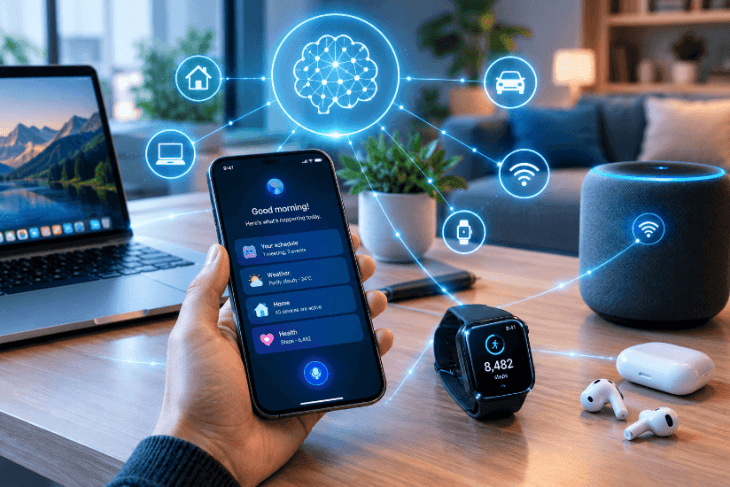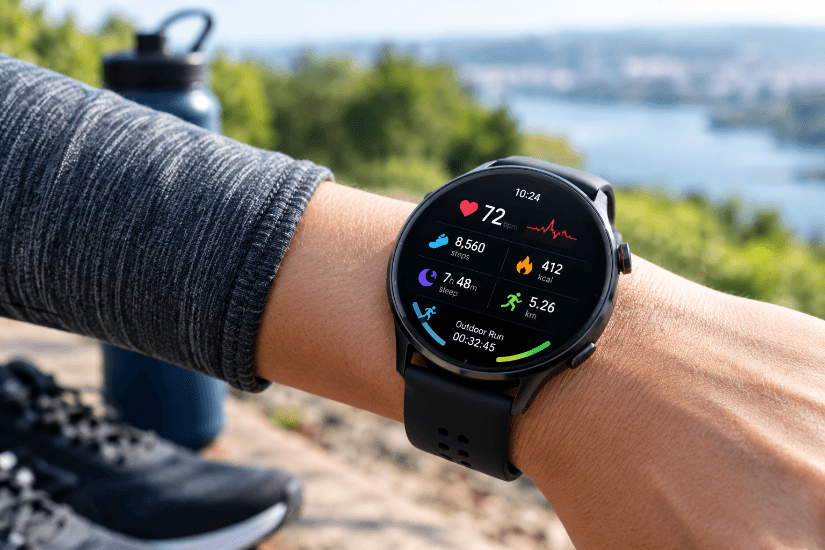
Choosing among the best smartwatches for health and fitness in 2027 depends on your phone, workout routine, budget, and preferred battery life. Some watches focus on everyday health tracking, while others offer advanced running metrics, outdoor navigation, and recovery insights. Apple Watch models are strong choices for iPhone users, Google Pixel Watch suits many Android users, and Garmin and Amazfit offer compelling options for fitness enthusiasts.
When comparing smartwatches, I look beyond the number of features listed on the box. Heart-rate monitoring, sleep tracking, GPS performance, comfort, battery life, and privacy all influence how useful a watch can be in everyday life. A premium model may offer more tools, but that does not automatically make it the right choice for everyone.
This guide compares popular smartwatch options using published specifications, manufacturer information, and available research. It does not claim hands-on testing of the listed models. Prices and product availability can change, so check the latest details before purchasing.
Quick Picks: Which Are the Best Smartwatches in 2027?
The best smartwatch depends on what you want to track and which features you will use regularly. Garmin is worth considering for fitness and recovery insights, Apple Watch offers close iPhone integration, and Google Pixel Watch combines Android apps with Fitbit health tracking. Amazfit provides alternatives for shoppers who prioritize battery life and value.
| Category | Recommended model | Main advantage |
| Best overall fitness watch | Garmin Venu 4 | Health insights and everyday workout tracking |
| Best for iPhone | Apple Watch Series 12 | Integration with Apple apps and services |
| Best for Android | Google Pixel Watch 4 | Google services and Fitbit-based tracking |
| Best for serious runners | Garmin Forerunner 570 | Detailed training tools and GPS |
| Best for battery life | Amazfit Balance 2 | Long advertised battery life |
| Best budget option | Amazfit Active 2 | Affordable fitness tracking |
| Best for outdoor activities | Amazfit T-Rex 3 Pro | Rugged construction and navigation features |
Prices, battery life, and regional feature availability vary. Treat manufacturer battery estimates as maximum figures under specified conditions rather than guarantees of everyday performance.
What Should You Look for in a Health and Fitness Smartwatch?
The best health and fitness smartwatch should fit comfortably, work with your phone, track the activities you care about, and provide information you can understand. Before buying, consider the sensors, sports features, battery life, app ecosystem, and ongoing costs.
Which health sensors and fitness features matter most?
Heart-rate tracking helps you monitor exercise intensity, while sleep tracking estimates your sleep duration and patterns. Heart rate variability (HRV) can provide additional information about recovery and changes in your body’s response to exercise or daily demands.
Built-in GPS is useful for runners, cyclists, and hikers because it can record distance, pace, and routes without requiring your phone to be nearby. Some watches also offer blood oxygen readings, ECG measurements, skin temperature tracking, and recovery scores.
However, features differ by model, country, and software version. Some advanced reports or coaching services may require a subscription.
Remember that wrist-based measurements are estimates. A smartwatch can help you recognize patterns, but it cannot diagnose a medical condition or replace professional testing.
How much should you spend on a fitness smartwatch?
Budget models and fitness trackers can cover basic needs such as step counting, heart-rate monitoring, sleep estimates, and workout recording. Midrange watches often add improved displays, GPS, and more sports features. Premium models may offer detailed training metrics, stronger materials, advanced navigation, and a wider selection of apps.
Instead of paying for every available feature, identify the tools you will use regularly. If you mainly walk and track sleep, a lower-cost device may be sufficient. If you train for races or spend long periods outdoors, investing in GPS accuracy, battery life, and training features may be worthwhile.
Also consider long-term expenses. Check whether advanced coaching, health reports, replacement straps, or cellular connectivity require additional payments.
Do you need a full smartwatch or a fitness tracker?
A full smartwatch is useful if you want apps, messages, notifications, music controls, and calls on supported models. A fitness tracker is usually smaller, lighter, and less expensive.
Some fitness-focused watches provide advanced GPS and recovery information without offering the same app experience as an Apple Watch or Google Pixel Watch. Compare individual models rather than assuming every smartwatch has the same capabilities.
Best Smartwatches for Health and Fitness in 2027: Detailed Reviews
1. Garmin Venu 4: Best Overall for Everyday Fitness
The Garmin Venu 4 is a strong option for people who want detailed health insights and workout tracking without charging their watch every night. It supports heart-rate monitoring, sleep analysis, stress tracking, blood oxygen measurements, and multiple exercise profiles.
It also offers recovery information, training readiness, and GPS features for outdoor workouts. Compatible iPhone and Android users can connect the watch through Garmin’s companion app.
Price: Approximately $549.99 in the United States.
Battery life: Up to 10 days for the 41 mm version and 12 days for the 45 mm version in smartwatch mode.
Garmin’s published Venu 4 specifications and battery information provide more detail about its health and fitness features. Actual battery life depends on GPS, music, notifications, and other settings.
The main advantage is its balance of everyday wellness tracking and sports features. Its main drawback is that its app selection is less extensive than that of some mainstream smartwatches.
Verdict: Consider the Venu 4 if you want one device for walking, gym sessions, running, sleep tracking, and recovery trends.
2. Apple Watch Series 12: Best Wearable Watch for iPhone
If you are looking for the best wearable watch for iPhone, the Apple Watch Series 12 is a strong option to compare. It combines activity tracking, health measurements, notifications, and apps within Apple’s ecosystem.
Its published features include heart-rate monitoring, ECG, sleep tracking, wrist temperature sensing, blood oxygen measurements, and alerts for certain heart-related patterns. Apple Health brings supported health and fitness information together on a compatible iPhone.
Price: Starts at approximately $399 in the United States; check current regional pricing.
Battery life: Up to 24 hours of normal use, or up to 38 hours in Low Power Mode.
The Series 12 works with compatible iPhones, not Android phones. Apple’s official Apple Watch Series 12 specifications provide details about compatibility, sensors, workouts, and battery performance.
Its main strength is integration with Apple apps and services. The biggest compromise is battery life, particularly if you track sleep every night. Short charging breaks may be necessary to maintain continuous tracking.
Verdict: Choose the Apple Watch Series 12 if you use an iPhone and want connected features alongside everyday health monitoring.
3. Google Pixel Watch 4: Best Smartwatch for Android
The Google Pixel Watch 4 combines smartwatch functions with Fitbit-based health and fitness tracking. It is worth considering if you want notifications, Google services, exercise records, and sleep insights in one device.
Features include heart-rate monitoring, sleep tracking, blood oxygen measurements, skin temperature sensing, and ECG functionality in supported regions. Some advanced health insights and coaching options may depend on the software version, location, and subscription plan.
Price: Starts at approximately $349.99 in the United States.
Battery life: Up to 30 hours for the 41 mm model and 40 hours for the 45 mm model with the always-on display enabled.
Google’s official Pixel Watch 4 specifications provide the latest details about its battery, sensors, and compatibility.
The main benefit is its integration with Android apps and Google services. Its main drawback is that it requires more frequent charging than many Garmin and Amazfit models. It does not pair with iPhones.
Verdict: Choose the Pixel Watch 4 if you want a connected Android smartwatch with useful health and fitness features.
Samsung Galaxy Watch models are also worth comparing if you use a Samsung phone, especially if you want access to Samsung-specific health tools.
4. Garmin Forerunner 570: Best Smartwatch for Runners
The Garmin Forerunner 570 is designed for runners who need more detailed training information than basic step counts and workout summaries. It offers multi-band GPS, training status, training readiness, heart-rate zones, and recovery metrics.
These features can help you review your pace, training effort, and progress over time. They are particularly useful for people following a structured running plan or preparing for a race.
Price: Approximately $549.99 in the United States.
Battery life: Up to 10 days for the 42 mm model and 11 days for the 47 mm model in smartwatch mode.
The Forerunner 570 works with compatible iPhones and Android phones. Its main strength is the depth of its running data, while its price may be difficult to justify for occasional walkers or casual gym users.
Battery life also drops significantly during intensive GPS workouts, particularly when music playback is enabled.
Verdict: Consider the Forerunner 570 if running is a major part of your routine and you will use its training metrics regularly.
5. Amazfit Balance 2: Best Long Battery Life Smartwatch
A long battery life smartwatch is useful if you want to track sleep, workouts, and daily activity without charging every night. The Amazfit Balance 2 is worth considering because it combines a bright AMOLED display, health tracking, GPS, offline maps, and numerous workout modes.
It connects to compatible Android and iPhone devices through the Zepp app.
Price: Approximately $299.99 in the United States.
Battery life: Advertised at up to 21 days under typical-use conditions, with up to 33 hours in accurate GPS mode.
Actual runtime depends on the features you enable and how frequently you exercise. Heavy use can reduce the advertised battery life considerably.
The main advantage is the combination of sports features and fewer charging breaks. The trade-off is a smaller third-party app ecosystem than those offered by Apple and Google.
Verdict: Choose the Balance 2 if you value long battery life, workout tracking, and outdoor navigation more than having a large selection of smartwatch apps.
6. Amazfit Active 2: Best Budget Smartwatch for Health Tracking
The Amazfit Active 2 is a practical option for shoppers who want fitness tracking without spending hundreds of dollars. It supports heart-rate monitoring, sleep tracking, GPS workouts, and multiple sports modes.
Depending on the version, it also offers offline maps and turn-by-turn directions. Its companion app provides health and fitness information, with core tracking features available without a required monthly subscription.
Price: Starts at approximately $99.99 in the United States.
Battery life: Advertised at up to 10 days under typical-use conditions.
The main benefit is value. You can track everyday activity, sleep, and workouts without paying for a premium smartwatch. However, its smart features and app selection are more limited than those of higher-priced models.
Verdict: Consider the Active 2 if you are buying your first fitness smartwatch or want basic health tracking at a lower price.
7. Amazfit T-Rex 3 Pro: Best Durable Smartwatch for Outdoor Activities
A durable smartwatch should be chosen for its construction and features, not simply its rugged appearance. The Amazfit T-Rex 3 Pro is designed for outdoor activities, with a rugged build, offline maps, route-planning tools, and support for a wide range of sports.
Its advertised water-resistance rating and navigation features make it worth considering for hiking, camping, and outdoor training, provided the activity falls within the manufacturer’s stated limits.
Price: Approximately $399.99 in the United States.
Battery life: Advertised at up to 25 days for the 48 mm version and 17 days for the 44 mm version. Accurate GPS use can reduce these estimates substantially.
Its strengths include battery life, navigation, and construction suited to demanding environments. The main drawbacks are its bulky design and more limited app ecosystem.
Before buying a rugged watch, check the screen material, water-resistance guidance, GPS performance, and repair options. Water resistance does not mean a watch is suitable for every water sport or depth.
Verdict: Choose the T-Rex 3 Pro if you need outdoor navigation, long battery life, and a rugged design for regular adventures.
Smartwatch Comparison: Features, Battery Life, and Price
The table below summarizes the main differences between these fitness watches. Prices and battery figures are approximate U.S. manufacturer-listed estimates and can change.
| Model | Best for | Battery estimate | Main drawback |
| Garmin Venu 4 | Everyday health and fitness | Up to 10–12 days | Fewer apps than Apple or Google |
| Apple Watch Series 12 | iPhone users | Up to 24 hours | Frequent charging |
| Google Pixel Watch 4 | Android users | Up to 30–40 hours | Shorter runtime than Garmin |
| Garmin Forerunner 570 | Runners | Up to 10–11 days | Expensive for casual use |
| Amazfit Balance 2 | Battery life and value | Up to 21 days | Smaller app ecosystem |
| Amazfit Active 2 | Budget fitness tracking | Up to 10 days | Fewer advanced smartwatch tools |
| Amazfit T-Rex 3 Pro | Outdoor activities | Up to 17–25 days | Large design |
Battery estimates are based on manufacturer figures for specified modes, not independent testing. GPS use, music, cellular connectivity, and display settings can reduce runtime.
A watch with built-in GPS can record outdoor workouts without your phone nearby. However, calls, messages, online maps, and music streaming may need cellular service, Wi-Fi, a phone connection, or downloaded content.
Which Smartwatch Tracks Health Most Accurately?
No smartwatch is the most accurate for every health measurement. Results depend on the sensor, watch fit, activity, software, and individual differences.
Wrist-based heart-rate tracking can be useful during everyday activities and many workouts. However, rapid changes in intensity, arm movement, loose straps, and poor skin contact can affect readings.
For a better reading, wear the watch snugly above your wrist bone and follow the manufacturer’s fitting instructions. If you need heart-rate data for structured training, compare independent reviews and consider whether a compatible chest strap would be more appropriate.
Can smartwatches accurately track sleep and recovery?
Smartwatches estimate sleep using movement, heart rate, and other signals. They can help you notice patterns, such as shorter sleep after late nights or changes in your routine. However, they do not measure sleep stages as precisely as a clinical sleep study.
Recovery scores and stress estimates may use HRV, resting heart rate, sleep, and recent activity. These scores can help you follow trends, but they are not medical measurements. A low score does not automatically mean something is wrong, and a high score does not guarantee that you are fully recovered.
Use these features to understand changes over several weeks rather than treating every daily score as a definitive result.
Can a smartwatch detect heart problems or measure blood pressure?
Some watches offer ECG recordings or notifications for possible irregular heart rhythms, including atrial fibrillation. These features may help you identify information worth discussing with a healthcare professional, but they cannot detect every heart condition or rule out a problem.
Most smartwatches do not directly measure blood pressure using an inflatable cuff. Do not rely on an unvalidated wearable feature to diagnose high blood pressure or guide treatment. Use a validated blood pressure monitor and follow professional medical advice.
A smartwatch is best used for activity tracking and health trends, not as a replacement for medical care. Seek urgent medical help for concerning symptoms such as chest pain, fainting, or difficulty breathing rather than relying on a watch reading.
Which Smartwatch Has the Best Battery Life?
If you want to track workouts and sleep without charging every night, fitness-focused watches from Amazfit and Garmin are worth comparing.
The Amazfit Balance 2 advertises up to 21 days of typical use, while the Garmin Venu 4 advertises up to 10–12 days in smartwatch mode. Apple Watch Series 12 offers up to 24 hours, while Google Pixel Watch 4 advertises up to 30–40 hours with its always-on display enabled.
Your charging schedule will depend on how you use the device. Frequent GPS workouts, music streaming, cellular calls, and continuous tracking consume more power than basic step counting and occasional notifications.
For sleep tracking, you can charge your watch while showering, getting ready, or working at your desk. For long hikes or runs, start with a full battery and check the estimated GPS runtime.
If you want to record sleep every night, a watch rated for several days or more may be more convenient than one that needs daily charging.
Smartwatch vs. Traditional Watch: Which Is Better?
The best smartwatch vs traditional watch comparison comes down to your priorities. A smartwatch can track health, record workouts, show notifications, and support apps. A traditional watch tells time without software updates or regular charging.
| Feature | Smartwatch | Traditional watch |
| Health tracking | Available on supported models | Usually unavailable |
| Notifications | Calls, messages, and app alerts on supported models | None |
| Battery | Hours to weeks, depending on the model | Months or years for some battery-powered models |
| Maintenance | Charging, updates, and possible battery replacement | Occasional battery changes or mechanical servicing |
| Style | Sporty, modern, and classic options | Classic and minimalist options |
| Technology dependence | Some functions require apps or connectivity | Generally works independently |
If you mainly want to count steps and estimate sleep, a fitness band may be sufficient. A hybrid smartwatch can offer an analog-style design with selected connected features.
Choose a traditional watch if you value simplicity and independence from technology. Choose a smartwatch if you will regularly use its fitness, health, and connected features.
Best Alternatives to Apple Watch
The best alternatives to Apple Watch depend on your phone and fitness goals. Garmin and Amazfit are worth comparing if you use an iPhone but want longer battery life or more sports-focused features.
Garmin Venu 4 offers detailed training and recovery information. Amazfit Balance 2 focuses on battery life, fitness tracking, and value. Both work with compatible iPhones, although their app experiences differ from Apple’s.
Android users can compare Google Pixel Watch and Samsung Galaxy Watch models. These watches offer connected features and health tools, but they cannot replace an Apple Watch on an iPhone.
Before purchasing an alternative, check the exact model’s compatibility, available health features, app requirements, and regional restrictions.
Smartwatch Buying Guide: Connectivity, Durability, and Privacy
What does Bluetooth do on a smartwatch?
Bluetooth connects a smartwatch to your phone over a short distance. It can sync fitness data, show notifications, control music, and support calls on compatible models.
Wi-Fi provides another connection for supported online functions. Cellular models can support calls and data away from your phone when paired with a compatible carrier plan.
Bluetooth is usually enough for everyday use. If you want to leave your phone at home, check which functions work independently.
What is the best standalone smartwatch without a phone?
The best standalone smartwatch depends on what you want to do without your phone.
A GPS watch can record routes, pace, and distance independently. Some watches also store music or maps for offline use. However, GPS alone does not provide independent calls or internet access.
For calls, messages, and online services away from your phone, choose a compatible cellular model and check carrier requirements. Even cellular watches may require a phone for setup or certain functions.
How durable should a smartwatch be?
For swimming, hiking, and everyday wear, check water resistance, screen protection, case materials, and repair options. A rugged watch may be better for outdoor activities, while a lighter model may be more comfortable for everyday wear and sleep tracking.
Follow the manufacturer’s guidance for swimming, diving, salt water, hot showers, and extreme temperatures. Water resistance can also decline as seals age or become damaged.
Are smartwatch health data and AI coaching private?
Smartwatches can collect sensitive information, including heart rate, sleep patterns, location, and workout history. Review the companion app’s permissions and privacy settings before syncing your data.
Use a strong account password, enable two-factor authentication when available, and limit unnecessary app access. Review how your health information may be stored or shared.
AI coaching can help explain workout trends or suggest training adjustments, but its advice can be incomplete or incorrect. Do not use an AI-generated score to diagnose a health problem or change medication.
Also check whether advanced coaching or reports require a subscription.
How long should a smartwatch last?
A smartwatch can remain useful for several years, but battery capacity declines with use. Software support may also end before the hardware stops working.
Before purchasing, check the warranty, battery replacement options, repair costs, and software support policy. Replaceable straps and accessible repairs can improve long-term value.
How to Choose the Right Smartwatch for Your Lifestyle
The right smartwatch should match your daily routine rather than the number of features on its specification sheet.
For beginners and everyday users: Look for comfortable wear, reliable step counting, sleep tracking, and simple notifications. A budget smartwatch or fitness band may cover your needs.
For gym workouts: Prioritize heart-rate zones, workout modes, and recovery trends. Choose a device that makes your training data easy to understand.
For runners: Look for reliable GPS, pace tracking, training tools, and enough battery life for your longest sessions. Garmin’s running-focused watches are worth comparing.
For hiking and outdoor adventures: Consider offline maps, navigation, a readable display, rugged construction, and long battery life.
For iPhone users: Apple Watch is a strong choice for connected features and integration with Apple services. Garmin and Amazfit offer alternatives if battery life is more important.
For Android users: Compare Google Pixel Watch and Samsung Galaxy Watch models for connected features, or consider Garmin and Amazfit for longer battery life and fitness-focused tracking.
For shoppers comparing smartwatch sizes: Focus on case width, weight, strap fit, and screen readability rather than gender labels. A large watch may feel bulky during sleep, while a smaller model can be just as useful for health tracking.
Frequently Asked Questions
1. What is the best smartwatch for health and fitness in 2027?
Garmin Venu 4 is a strong all-round option for health and fitness tracking. Apple Watch Series 12 suits many iPhone users, while Google Pixel Watch 4 is worth considering for Android. Amazfit offers alternatives for shoppers who prioritize price and battery life.
2. Which smartwatch is best for heart-rate and sleep tracking?
Apple, Garmin, Google, Samsung, and Fitbit offer heart-rate and sleep-tracking features. Accuracy varies by model and activity, so compare independent reviews and remember that sleep estimates are not equivalent to a medical sleep study.
3. Are smartwatches accurate enough to track daily health?
They can help you follow trends in resting heart rate, activity, and sleep schedules. Readings can be affected by movement, watch fit, and sensor limitations. Use them as general guidance rather than medical test results.
4. Which smartwatch works best with an iPhone?
Apple Watch offers close integration with iPhone apps and services. Compatible Garmin and Amazfit models are alternatives for people who want longer battery life or sports-focused features.
5. Which Android smartwatch has long battery life?
Garmin and Amazfit offer Android-compatible watches that can last several days or longer, depending on the model and settings. Google and Samsung watches provide connected features but often need more frequent charging.
6. Is a fitness tracker better than a smartwatch?
A fitness tracker may be better for basic step counting, sleep estimates, and workout records at a lower price. A smartwatch adds features such as apps, notifications, and calls on supported models.
7. Can a smartwatch measure blood pressure?
Most smartwatches do not directly measure blood pressure using a validated cuff. Do not use unvalidated readings to diagnose or treat high blood pressure.
8. Do smartwatches require a subscription?
Basic activity and workout tracking often works without a monthly subscription. Some brands charge extra for advanced coaching or reports. Cellular models may also require a carrier plan.
9. Can I use a smartwatch without carrying my phone?
Yes, for some functions. Built-in GPS can record outdoor routes, and compatible watches may store music offline. Calls and internet access usually require cellular connectivity and a supported plan.
10. How long should a good fitness smartwatch last?
A fitness smartwatch may last several years, depending on battery health, physical condition, and software support. Check repair options, battery replacement costs, and the manufacturer’s support policy before buying.
Final Verdict: Which Smartwatch Should You Buy?
The best smartwatches for health and fitness in 2027 offer different benefits depending on your priorities.
Garmin Venu 4 is a strong choice for everyday health insights and fitness tracking. Apple Watch Series 12 suits iPhone users who value apps and connected features. Google Pixel Watch 4 is worth considering for Android users, while Garmin Forerunner 570 offers more specialized tools for runners. Amazfit Balance 2 and Active 2 are attractive options for shoppers who want useful fitness features and fewer charging breaks.
Before you decide, compare battery life, phone compatibility, sensor features, regional availability, and any subscription costs. Remember that smartwatch health readings are estimates, not medical diagnoses.
Ready to choose your next fitness smartwatch? Compare the latest prices, review the manufacturer’s specifications, and shortlist the models that match your workout routine and budget. Whether you need advanced running data, a long battery life smartwatch, or simple daily health tracking, choose the watch you will feel comfortable wearing and using consistently.